Forgotten History Club
Hats, tees and hoodies honoring the teams, places and companies that shaped the Bay Area and beyond, and that we miss. Each piece is an unofficial homage, made to order and not affiliated with any original owner. Tees, hoodies and hats are coming soon.
Forgotten Franchise Club
16 short-lived pro teams, grouped by city.
Anaheim, CA
Southern California Sun
The Southern California Sun played World Football League football at Anaheim Stadium in 1974 and 1975, coached by Hall of Famer Tom Fears. In 1974 they won the Western Division at 13–7, then fell to The Hawaiians in the playoffs. The WFL collapsed during the 1975 season, and the Sun set with it. Orange-and-magenta football under the Anaheim lights. This unofficial homage is not affiliated with any league or the original club.
Birmingham, AL
Birmingham Vulcans
The Birmingham Vulcans replaced the Americans in the World Football League's 1975 season, keeping much of the roster under new ownership and a new name. They were 9–3, the league's best record, when the WFL folded in October before a championship game could be played. A strong second act that never got its final. This unofficial homage is not affiliated with any league or the original club.
Chicago, IL
Chicago Winds
The Chicago Winds lasted five games in the World Football League's 1975 season before the club folded, one of the shortest runs in a short-lived league. They were gone well before the WFL itself collapsed in October. A gust, then silence. Chicago football that barely had time to arrive. This unofficial homage is not affiliated with any league or the original club.
Cincinnati, OH
Cincinnati Stingers
The Cincinnati Stingers played hockey in the World Hockey Association from 1975 to 1979. When the NHL absorbed four WHA clubs in 1979, the Stingers were not among them, and major pro hockey in Cincinnati ended with the franchise. Four seasons of WHA hockey that missed the merger boat. This unofficial homage is not affiliated with any league or the original club.
Denver, CO
Colorado Xplosion
The Colorado Xplosion played women's basketball in the American Basketball League from 1996 to 1998 and won the Western Conference in the league's first season, at 25–15. The ABL folded during 1998–99, ending the Denver club with it. A first-year conference title from a league that did not last long enough for a third trophy. This unofficial homage is not affiliated with any league or the original club.
Honolulu, HI
The Hawaiians
The Hawaiians played World Football League football in Honolulu in 1974 and 1975, the islands' major pro football team of the era. In 1974 they beat the Southern California Sun in the playoffs, then lost a 22–19 semifinal at Birmingham. Home games were at Honolulu Stadium. Pro football in the middle of the Pacific. This unofficial homage is not affiliated with any league or the original club.
Memphis, TN
Memphis Southmen
The Memphis Southmen, also called the Grizzlies, played World Football League football in 1974 and 1975. They posted the league's best 1974 regular-season record at 17–3, then lost a semifinal to Florida, 18–15. In 1975 they finally suited up Miami stars Larry Csonka, Jim Kiick, and Paul Warfield, who had signed a year earlier. Memphis football that almost joined the NFL. This unofficial homage is not affiliated with any league or the original club.
Milwaukee, WI
Milwaukee Does
The Milwaukee Does played women's basketball in the Women's Professional Basketball League from 1978 to 1980. On December 9, 1978, they dropped the WBL's inaugural game, 92–87, to the Chicago Hustle. They lasted two seasons in the first U.S. pro league for women. Milwaukee, present at the start. This unofficial homage is not affiliated with any league or the original club.
Minneapolis, MN
Minnesota Fillies
The Minnesota Fillies played women's basketball in the Women's Professional Basketball League from 1978 to 1981, based in Minneapolis. They lasted all three of the WBL's seasons, outlasting several clubs that folded earlier, in the first U.S. pro league for women. A full-run Minnesota franchise from a league that opened the door. This unofficial homage is not affiliated with any league or the original club.
Moline, IL
Moline Universal Tractors
The Moline Universal Tractors were an independent professional football club in Moline, Illinois, in 1920, named for the local Universal Tractor company. They were not APFA members, but they met league teams, including the Decatur Staleys, in games that still appear in early NFL records. Factory-town football at the dawn of the NFL. This unofficial homage is not affiliated with any league or the original club.
Oakland, CA
Oakland Stompers
The Oakland Stompers lasted one NASL soccer season in 1978, after the Connecticut Bicentennials moved west. Their name and Corkpoppers cheerleaders nodded to Bay Area wine country. The home opener against the San Jose Earthquakes drew more than 32,000 to the Oakland Coliseum, and the club signed goalkeeper Shep Messing to what was then the richest contract for an American-born player. One summer of soccer under the East Bay lights. This unofficial homage is not affiliated with any league or the original club.
Philadelphia, PA
Philadelphia Bell
The Philadelphia Bell played World Football League football in 1974 and 1975. The club became a symbol of the league's attendance troubles when it was revealed that early crowd figures had been padded with large numbers of free tickets. They still lasted both WFL seasons, longer than many richer-looking clubs. A complicated, very 1970s football story. This unofficial homage is not affiliated with any league or the original club.
Portland, OR
Portland Power
The Portland Power played women's basketball in the American Basketball League from 1996 to 1998. In 1997–98 they won the Western Conference at 27–17, Natalie Williams was named regular-season MVP, and Lin Dunn was Coach of the Year. A second-season leap in a league that did not get a fourth. This unofficial homage is not affiliated with any league or the original club.
San Francisco, CA
San Francisco Gales
The San Francisco Golden Gate Gales brought first-division soccer to Kezar Stadium in 1967, in the United Soccer Association that soon merged into the NASL. The roster was imported from Dutch club ADO Den Haag, and Ernst Happel coached a side that finished second in the Western Division. Ferenc Puskás was signed to coach before the club folded in the merger shuffle. A single windy season by the Bay. This unofficial homage is not affiliated with any league or the original club.
San Francisco Pioneers
The San Francisco Pioneers played women's basketball in the Women's Professional Basketball League, the first U.S. pro league for women, from 1979 to 1981. An expansion club in the WBL's second season, they reached the 1979–80 semifinals and lasted until the league itself closed after three seasons. Early Bay Area pro hoops, from the league that opened the door. This unofficial homage is not affiliated with any league or the original club.
San Jose, CA
San Jose Lasers
The San Jose Lasers played women's basketball in the American Basketball League from 1996 to 1998, with 1996 Olympic gold medalist Jennifer Azzi in the backcourt. They reached the ABL semifinals in each of the league's two full seasons, falling both times to the Columbus Quest. The ABL folded during the 1998–99 season and took the Lasers with it. Silicon Valley hoops from a league that burned bright and brief. This unofficial homage is not affiliated with any league or the original club.
Places
Playland-at-the-Beach
Where Golden Gate Park meets Ocean Beach, Playland-at-the-Beach was San Francisco's seaside amusement park for generations. Families rode the Big Dipper coaster and the carousel, slid down the Fun House chutes, and were greeted by the cackling mechanical Laffing Sal. The park closed in 1972 and condos replaced it, but locals still swap stories about it. This unofficial homage is not affiliated with any company or original owner.
Sutro Baths
Adolph Sutro opened the Sutro Baths in 1896 on the cliffs near the Cliff House: a glass-roofed palace of seven saltwater pools filled by Pacific tides. Thousands could swim at once. It later became an ice rink as crowds faded. In 1966, during demolition, a fire left the ruins visitors explore today. This unofficial homage is not affiliated with any company or original owner.
Fleishhacker Pool
Opened in 1925 beside the San Francisco Zoo, Fleishhacker Pool was one of the largest outdoor saltwater pools in the world, about 1,000 feet long, so big that lifeguards patrolled it in rowboats. Seawater pumped from the ocean filled it. Storm damage to its intake pipe and dwindling crowds led the city to close it in 1971. This unofficial homage is not affiliated with any company or original owner.
Neptune Beach
Called the 'Coney Island of the West,' Neptune Beach in Alameda drew crowds from all over the Bay from 1917 to 1939 with saltwater pools, a roller coaster, a sandy beach, and dance halls. It is often credited with popularizing frozen treats on a stick and snow cones. The Great Depression and the new Bay Area bridges helped close it. This unofficial homage is not affiliated with any company or original owner.
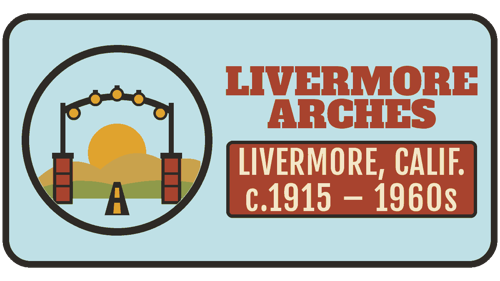
Livermore Arches
Around 1915, Livermore began welcoming travelers with two big 'Livermore' arches over its north (L Street) and east (First Street) entrances, part of the welcome-arch craze that put signs over main streets nationwide. Pleasanton's arch still stands, but Livermore's came down in the 1960s, and their letters were reportedly scrapped. Only about 40 such arches survive. This unofficial homage is not affiliated with any company or original owner.
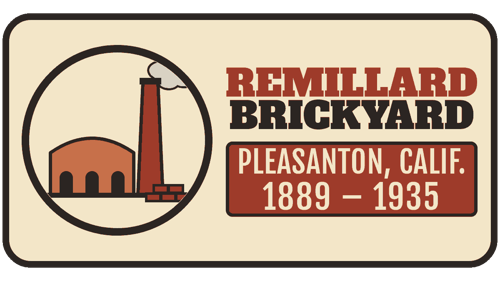
Remillard Brickyard
In 1889 the Remillard Brick Company opened a brickyard on Stanley Boulevard just outside Pleasanton, firing local clay into bricks for a growing Bay Area. Business slumped in the Great Depression, and a fire in June 1935 ended 46 years of brickmaking. Along with Livermore's Carnegie brick works and the old coal towns nearby, it recalls the Tri-Valley's forgotten industrial past. This unofficial homage is not affiliated with any company or original owner.
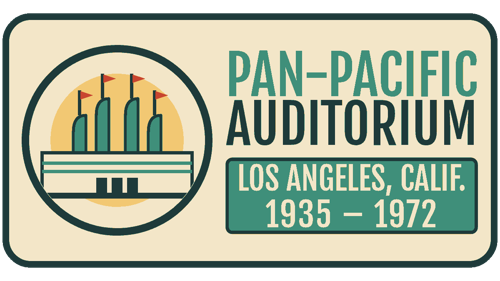
Pan-Pacific Auditorium
With its streamline moderne towers shaped like fins, the Pan-Pacific Auditorium opened in Los Angeles in 1935 and hosted car shows, ice shows, circuses, political rallies, and a young Elvis Presley. Newer arenas drew its events away, and it closed in 1972. The empty building burned in 1989, and its fins became a symbol of lost LA architecture. This unofficial homage is not affiliated with any company or original owner.
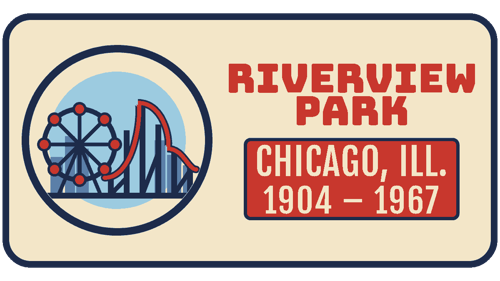
Riverview Park
For more than six decades Riverview Park on Chicago's North Side billed itself as the world's largest amusement park, home of wooden coasters like the Bobs and the Shoot-the-Chutes. Generations of Chicagoans grew up on its rides and midway games. Riverview closed suddenly after the 1967 season, and the land became a shopping center and police station. This unofficial homage is not affiliated with any company or original owner.
Freedomland U.S.A.
Billed as the East Coast answer to Disneyland, Freedomland U.S.A. opened in the Bronx in 1960 on grounds shaped like a map of the United States, where visitors rode through the Great Chicago Fire, the San Francisco earthquake, and the Old West. Competition from the 1964 World's Fair and money troubles closed it in 1964. Co-op City replaced it. This unofficial homage is not affiliated with any company or original owner.
Palisades Amusement Park
Perched on the cliffs above the Hudson River, Palisades Amusement Park entertained New Yorkers and New Jerseyans from 1898 to 1971 with a giant saltwater pool, the Cyclone coaster, and rock 'n' roll shows. It inspired the 1962 hit song 'Palisades Park.' Traffic and crowding pushed the owners to sell, and high-rise apartments now stand on the site. This unofficial homage is not affiliated with any company or original owner.
Steeplechase Park
George Tilyou opened Steeplechase Park at Coney Island in 1897, naming it for its mechanical horse-race ride. Its grinning Funny Face mascot, the glass-walled Pavilion of Fun, and later the towering Parachute Jump made it a Brooklyn summer tradition. It outlasted its rivals as Coney Island's longest-running park before closing for good in 1964. This unofficial homage is not affiliated with any company or original owner.
Japanese Village and Deer Park
Down the road from Knott's Berry Farm, the Japanese Village and Deer Park in Buena Park opened in 1967 and let visitors hand-feed tame deer among tea houses, koi ponds, and Japanese gardens. It later added animal and dolphin shows, but it was small next to its giant theme-park neighbors and struggled to compete. The quiet garden park closed in 1975. This unofficial homage is not affiliated with any company or original owner.
Companies
Key System
Before BART, the Key System moved the East Bay. Its orange electric trains and streetcars linked Oakland, Berkeley, and beyond, and from 1939 its trains crossed the Bay Bridge's lower deck into San Francisco. As cars and freeways took over, ridership fell. Transbay rail ended in 1958, and the system passed to the new AC Transit in 1960. This unofficial homage is not affiliated with any company or original owner.
Emporium-Capwell
The Emporium opened on San Francisco's Market Street in 1896, a grand department store under a glass dome famous for its rooftop holiday rides and Santa visits. Across the bay, H.C. Capwell Co., founded in 1889, was Oakland's store. The two joined in 1927 as Emporium-Capwell and spread into Bay Area malls until 1996, when the stores became Macy's. This unofficial homage is not affiliated with any company or original owner.
Mervyn's
Mervin Morris opened the first Mervyn's in San Lorenzo in 1949, and the chain grew from its Hayward headquarters into a West Coast favorite for affordable family clothes and back-to-school shopping, remembered for its 'Open, open, open!' commercials. After ownership changes and heavy debt, Mervyn's filed for bankruptcy in 2008 and closed its last stores that year. This unofficial homage is not affiliated with any company or original owner.
Blum's
Founded in 1892, Blum's was San Francisco's sweet stop, a candy shop and soda fountain near Union Square where shoppers paused for sundaes, chocolates, and its famous Coffee Crunch Cake, created in the 1940s. Branches spread to Bay Area shopping centers, but the Union Square shop closed in 1972. Today the cake lives on mostly in treasured home recipes and bakery remakes. This unofficial homage is not affiliated with any company or original owner.
Gottschalks
Emil Gottschalk opened a small dry-goods store in Fresno in 1904, and it grew into Gottschalks, the Central Valley's homegrown department store chain, with stores across California and the West. For valley families it was the place for prom outfits and holiday shopping. Hit hard by the 2008 recession, Gottschalks filed for bankruptcy in 2009 and closed. This unofficial homage is not affiliated with any company or original owner.
FedMart
Sol Price opened the first FedMart in San Diego in 1954 as a membership store for government workers, selling everything from groceries to tires at low prices. It grew to dozens of stores across the Southwest. After the chain was sold, Price left and went on to launch Price Club, a pioneer of warehouse shopping. FedMart closed in 1982. This unofficial homage is not affiliated with any company or original owner.
Builders Emporium
Builders Emporium was Southern California's go-to hardware chain after World War II, helping a generation of new homeowners stock up on lumber, paint, and tools for their tract houses. It started in the San Fernando Valley in the 1940s and grew to dozens of stores statewide before bigger warehouse competitors moved in. The last stores closed in 1993. This unofficial homage is not affiliated with any company or original owner.